Lessons from the road
Daymond John
Founder of FUBU and Shark Tank investor
A small budget forces good decisions.
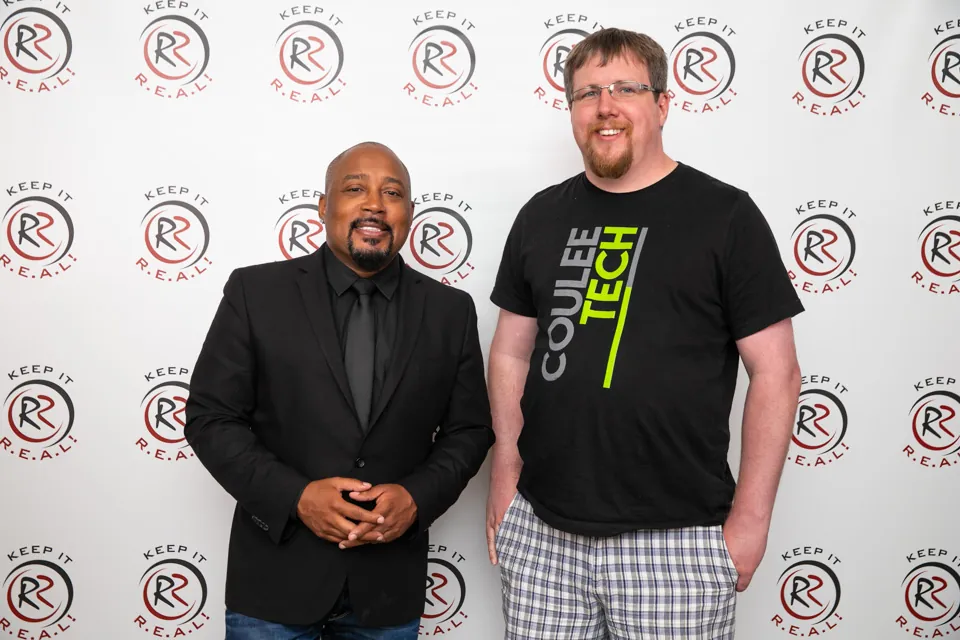
In Coulee Tech's early years, Rod watched Shark Tank and thought how much he would love to talk with the Sharks and pitch them his ideas. Daymond John was one of the people he pictured doing that with.
Then Rod got to talk with him, and John's own story came across as far bigger than the show. Hearing about the ups and downs behind FUBU, Rod came away thinking Shark Tank was the smallest part of John's journey.
What John built
John started FUBU in his mother's house in Hollis, Queens. He and his friends sewed hats and sold them for $10 each on a street corner. The first day brought in about $800. He was working at Red Lobster at the same time, and the business grew from there.
To fund real production, John and his mother took out a second mortgage on the house, reported at $100,000. He has said since that he would not tell other founders to do the same. Buyers at a Las Vegas trade show then placed several hundred thousand dollars in orders, more than the company could afford to fill. A New York Times ad led to a deal with Samsung Textiles, which underwrote the manufacturing.
His childhood neighbor LL Cool J wore the brand, and "For Us, By Us" became a phrase people knew. FUBU reached about $350 million in annual sales at its 1998 peak. John says it has brought in more than $6 billion in global sales over its life.
John joined Shark Tank when it began in 2009. He wrote The Power of Broke in 2016, and in 2017 he was diagnosed with thyroid cancer, which he has discussed publicly. He now runs The Shark Group, a brand management and consulting firm.
What Rod heard
John tells audiences that having no money can be a gift. When you cannot afford to waste anything, you stay close to your customers and think hard before you spend. He also talks about building a brand people believe in before you have the budget to advertise it.
For Rod, the point was that the investor chair is the last chapter, not the first. The earlier chapters had a mortgage, a mountain of orders and a lot of risk.
How Rod applies it
- Start AI with what you already have. Most businesses do not need a large AI budget to begin. Rod's talks point to first use cases that run on tools a company is probably already paying for.
- Run a small pilot. One team, one process, one measurable result. Then decide whether to spend more. This is how Rod approaches AIBMM coaching too.
- Build capacity before demand. FUBU had orders it could not fill. Rod encourages growing IT companies to line up people, process and security before they chase the next big client.
- Wear the brand. John put FUBU on anyone who would wear it, starting with the people around him. Rod shows up to events in a Coulee Tech shirt for the same reason: a brand people see is a brand people remember.
Rod met each of these people at business growth events where they were the featured speaker. The lessons are his own takeaways and do not imply an endorsement by anyone pictured.
“I don’t think there will be a profession in the next year or two that isn’t heavily dependent on AI.”Rod Holum
Planning a conference, leadership retreat or team workshop? Tell Rod about it.
Request Rod to speak →