Lessons from the road
Gene Simmons
KISS co-founder, brand builder and entrepreneur
The band was the product. The brand was the business.
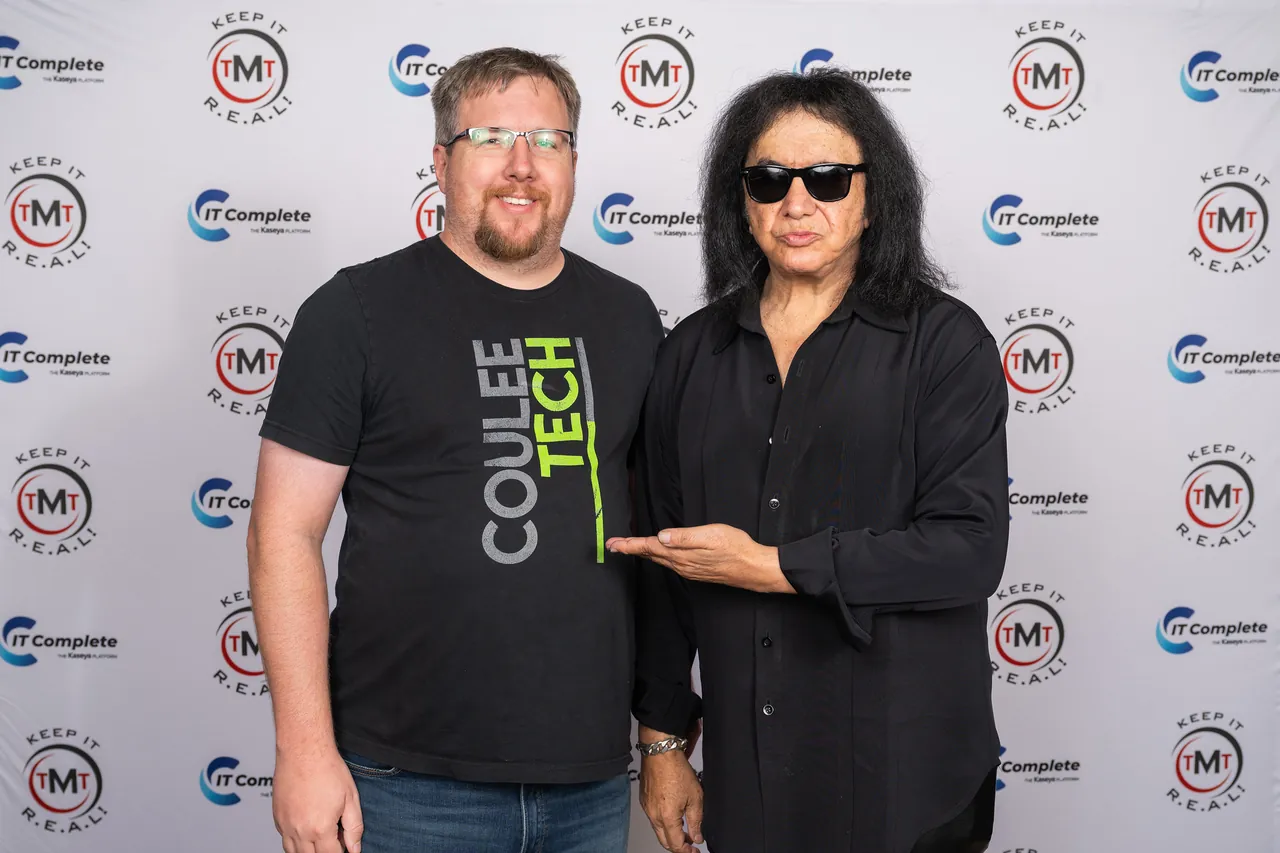
Most people know Gene Simmons from the stage: the makeup, the boots, the tongue. Rod came away from his talk with something different. Simmons was not only a rock star who happened to make money. He was a salesman and marketer who understood that KISS succeeded because it was marketed well, not just because of the music.
That perspective stuck with Rod because it is the same one he lives every day as a business owner. A good product is the entry fee. How you present it, protect it and extend it decides how far it goes. Rod also got a quick moment with Simmons, who pointed straight at his Coulee Tech T-shirt, which was about as on-brand as it gets.
What Simmons built
KISS formed in New York City in 1973, with Simmons and Paul Stanley as the founders. From the start the band was a package: four makeup characters (Simmons was The Demon), a logo, a stage show and a fan base, the KISS Army, that grew into the hundreds of thousands.
Then came the merchandise. KISS is widely reported to have put its name on more than 3,000 licensed products over the years, from lunch boxes to a coffin sold as the KISS Kasket. Simmons wrote about the thinking in his 2014 book, Me, Inc., and carried it into other ventures: Simmons Records (founded 1988), the reality series Gene Simmons Family Jewels (2006 to 2012), the LA KISS arena football team (2013), and the Rock & Brews restaurant chain.
The band played its final show in New York in December 2023. In 2024, Pophouse Entertainment Group of Sweden bought KISS's catalog, name and likeness rights, in a deal widely reported at around $300 million (the price was not officially disclosed). Pophouse plans digital avatars of the band, so the brand is designed to keep performing after the people stop touring. That is what owning an asset, rather than just a job, looks like.
What Rod heard
Simmons tells audiences that the music alone was never the whole business. In his telling, you decide what you are selling, you make it instantly recognizable, and you keep control of the name.
For Rod, the useful part was how ordinary the principles are. Be easy to recognize. Say the same thing over and over until people repeat it back. Look for every honest place the brand can show up. None of it is complicated, and most small businesses never do it on purpose.
How Rod applies it
- Treat the brand as an asset. Coulee Tech has a voice people remember, from "buttkicking IT support" to the team's "cybercriminal butt-kickers." Rod keeps it consistent because a brand people recognize shortens every sales conversation.
- Marketing is part of the product. An IT company can be excellent and still invisible. Rod's talks, books and photos like this one are how the work gets noticed before anyone picks up the phone.
- Extend the brand carefully. Simmons put KISS in many places, but always with the same face. Rod does the same with keynotes on AI and cybersecurity, AIBMM coaching and his books, each one pointing back to the same practical message.
- Build something that outlasts you. The KISS sale shows a brand can have value apart from its founders. Rod thinks about Coulee Tech the same way: documented, repeatable and known for something specific.
Rod met each of these people at business growth events where they were the featured speaker. The lessons are his own takeaways and do not imply an endorsement by anyone pictured.
“I don’t think there will be a profession in the next year or two that isn’t heavily dependent on AI.”Rod Holum
Planning a conference, leadership retreat or team workshop? Tell Rod about it.
Request Rod to speak →